Simply Stirling!
At last, after seven months of sleeping every night at the flat, the chance comes to get away for a few days. It’s technically summer (although the weather was unaware) so I decided to have a few days away and see some new four walls.
I chose Stirling and Falkirk. First of all, they’re not too distant, an hour and a half on the train. Secondly, there are plenty of attractions that are not too dispersed so I would not miss having the car too much. I stayed in Stirling but Falkirk is only half an hour away on the bus (which is free with my oldies pass, of course) so not inconvenient.
I stayed at Allan Park, another development by Bield (the company that runs the building where I live). If you are a Bield resident, you can stay in other developments for £11 a night which is a bargain. It’s a very convenient location, just five minutes from the shops, the stations and many attractions.
Monday – Stirling
For the first afternoon, I did a little tour of Stirling, looking at some of the attractions that I had researched. At the top, near the Castle, is a cemetery with a couple of interesting things. I quote their details below (from Atlas Obscura):
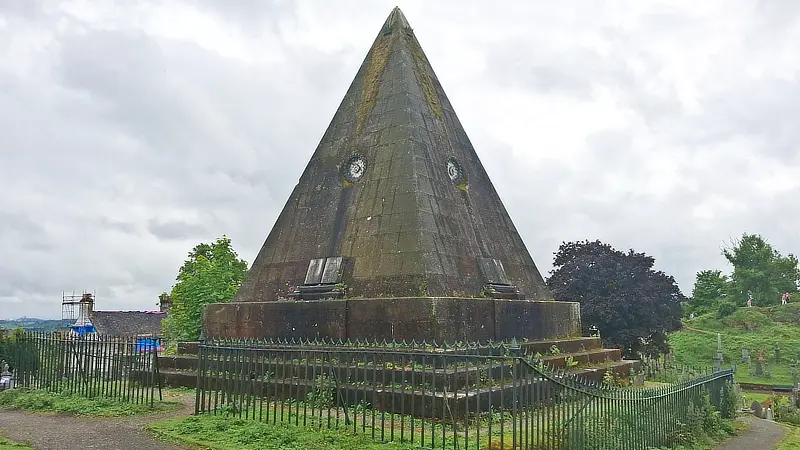
The Star Pyramid, also known as Salem Rock is a massive sandstone, ashlar pyramid dominating the area below Stirling Castle beside the Old Town Cemetery.
The pyramid is enclosed by wrought iron railings and stands on a stone-stepped base upon a shaped grassy mound. The pyramid is on a raised plinth of four steps and has a set of steps to the south leading to it. These are flanked by two stone globes, which at one time would have been surmounted by bronze eagles.
Marble Bibles rest on the base of each face of the pyramid, which is also carved with references to various Biblical texts. A Bible and Confession of Faith were sealed into an inner chamber in the pyramid upon completion.
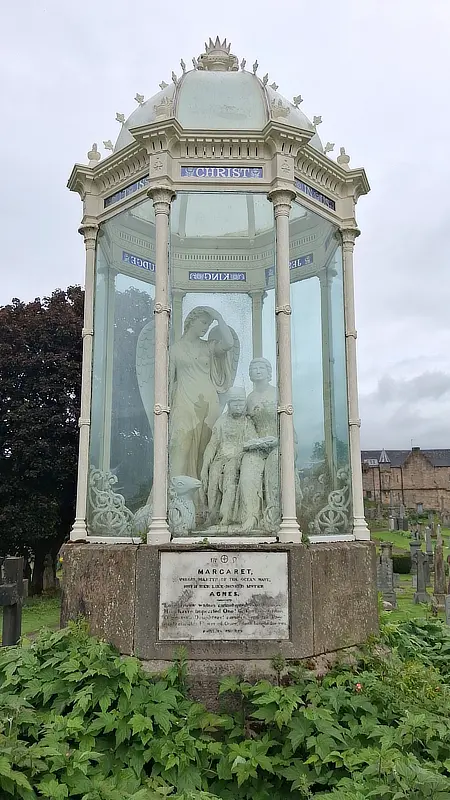
And the Martyrs’ Monument:
Nestled among the many headstones from the 17th and 18th centuries in Stirling’s Old Town Cemetery is a rather large and ornate greenhouse that surrounds three stone figures. One is that of an angel. The other two represent two sisters, one who was brutally massacred during a period of Scottish history known as the “Killing Time”.
Margaret and Agnes Wilson were two teenage sisters who lived in Newton Stewart near Wigtown. They were both devout Covenanters and firm believers in the Presbyterian faith.
It was a trying time, as people were actively being forced to pledge allegiance to the king as leader of the church, rather than God. Because their strongly held beliefs clashed with this, the Wilson sisters were both tried and found guilty for refusing to pledge allegiance to King James VII. The younger sister, Agnes, was eventually freed on bail, but 18-year-old Margaret was condemned to death by drowning.
After that visit, I made my way to the Stirling Old Bridge, built around 1500 and close to the site of the bridge that gave its name to the Battle of Stirling Bridge. I had done some research on the Wars of Independence so had read about that battle as well as Bannockburn.
Tuesday – Falkirk
The next day promised decent weather (unlike Wednesday) so I made my way on the bus to Falkirk. There are two really big attractions in Falkirk – the Falkirk Wheel and the Kelpies, and unfortunately they’re at opposite ends of the town. There is one bus connecting the two but it only runs every hour so there was a lot of walking that day.
The Wheel connects the Forth and Clyde Canal with the Union Canal, avoiding the old eleven-lock connection. It’s a marvellous sight and I was quite impressed that people had the ability to design it, and the courage to allow it to go ahead. I can imagine many old-fashioned planners rejecting it as too modern, but now it attracts thousands of visitors who never go on the canals.
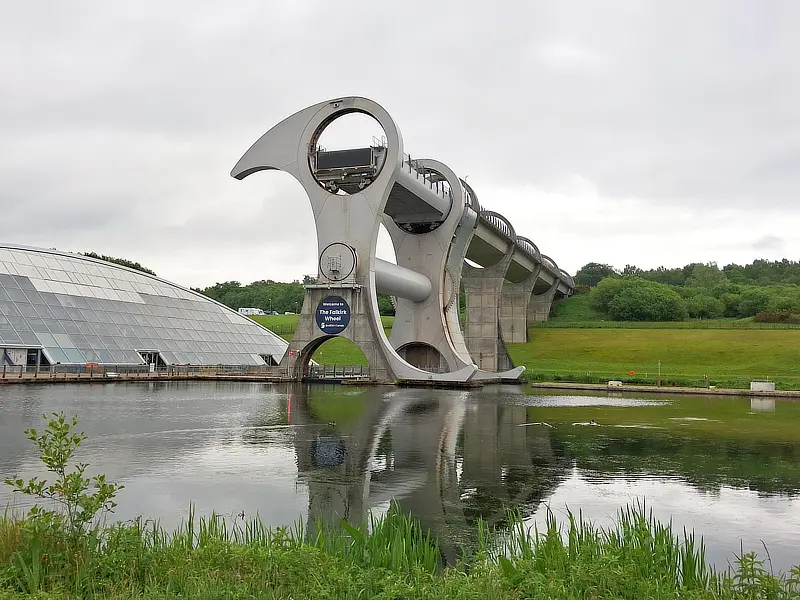
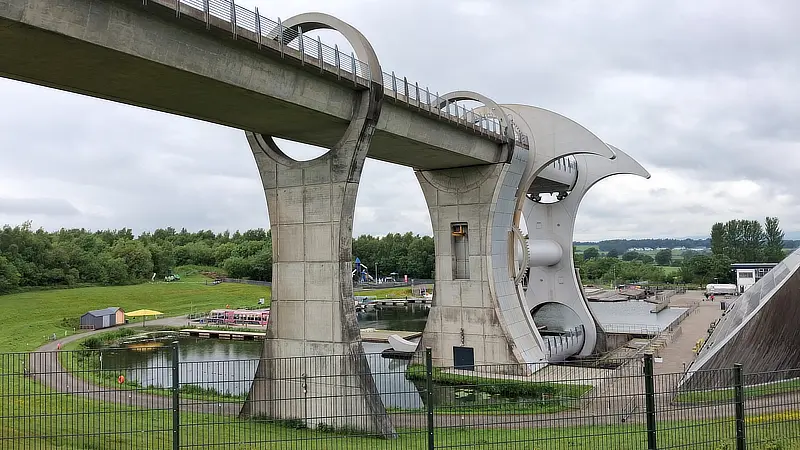
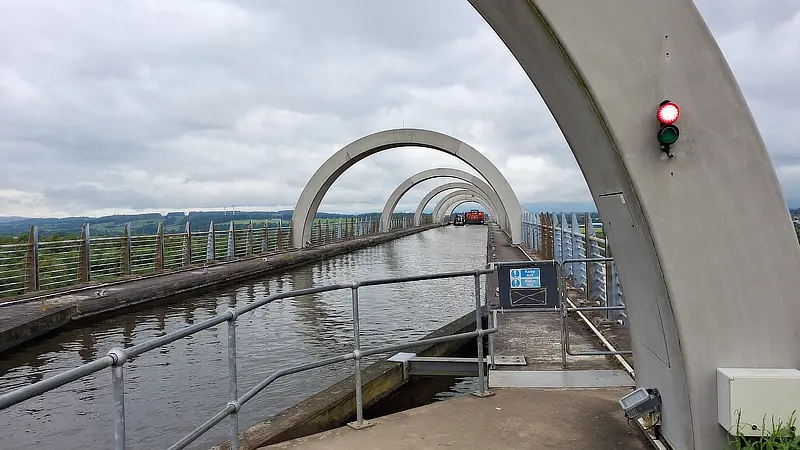
After watching a narrow boat descend in the Wheel, I caught a bus to the town centre and then walked to the Kelpies which sit in Helix Park. Lots of roadworks there so a long detour to an already long walk but the sight of the horse heads was worth it. The Kelpies are really stunning, even when you catch sight of them from afar; when you are right underneath, they’re breath-taking. After I good look around, I sat in the cafe with a cup of tea, and I couldn’t take my eyes of them.
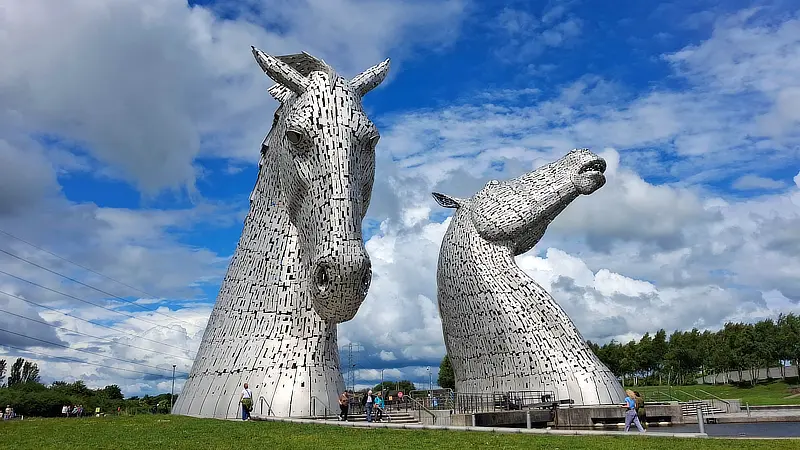
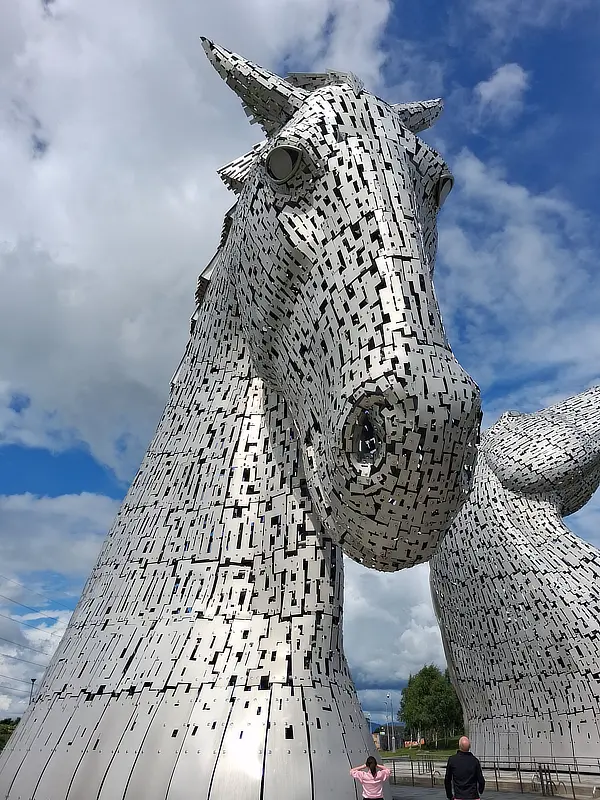
I would have liked to have visited Torwood Castle and the Blue Pool on the way back (between Stirling and Falkirk) but I had walked too far and abandoned that idea. Those will have to wait for another trip for there are still attractions in the area that I want to visit. Too much for one visit.
Wednesday – Stirling
The forecast for the last day was dire with heavy rain predicted so I stayed close to home: Stirling Castle and the Wallace Monument. The day started dry so I decided to take the Monument first as it involved a longer walk and involved a view which would be less effective in the rain.
The Monument commemorates William Wallace who commanded the Scots at the Battle of Stirling Bridge although Andrew Moray was the real military genius behind the leadership. He died after the battle as Wallace found out when he was defeated at the Battle of Falkirk. Edward I learned lessons from Stirling Bridge which Wallace did not so Moray is unfairly ignored.
Nevertheless the Monument was dedicated to Wallace and overlooks the battlefield of Stirling Bridge. There is a free shuttle from the cafe/shop to the Monument but I decided to walk up the hill. The tower itself has 246 steps to the top so I might have regretted that.
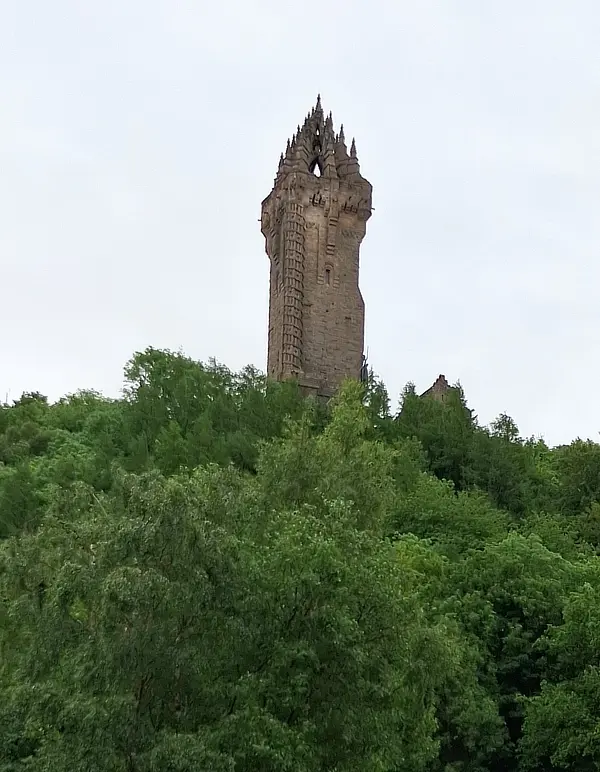
It’s a long climb but the views from the top are spectacular, looking down on the Battlefield, Stirling and the surrounding countryside.
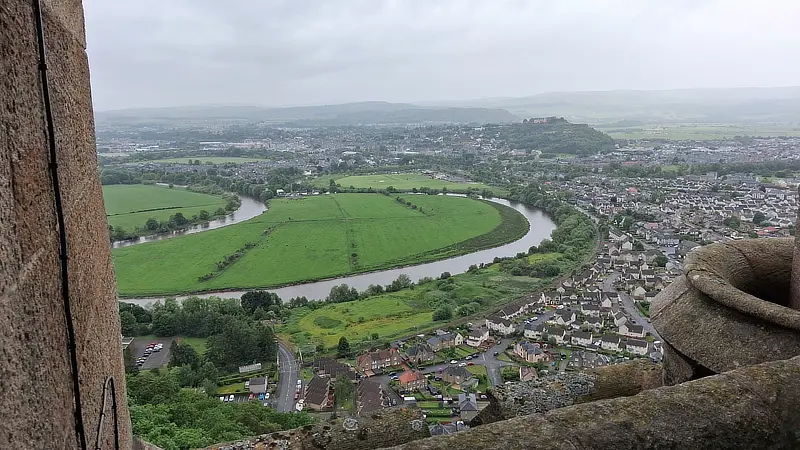
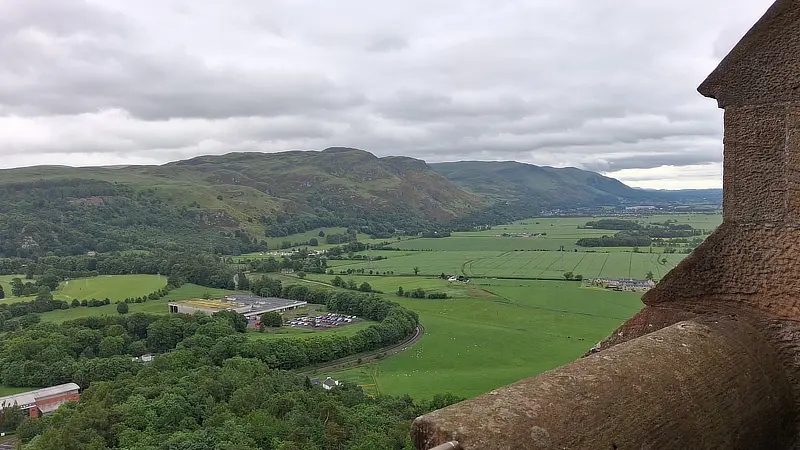
The rain was already starting to fall when I caught a bus back to Stirling. After a break in the flat, I made my way to the Castle although the rain was not doing it justice. It is not cheap to get in but I had bought membership of Historic Scotland (English Heritage equivalent) so did not cost me anything and I can always go back another sunnier day. What I noticed between the rain was fascinating and there was a museum to the Argyll and Sutherland Highlanders (always of interest because of Plymouth Argyle). There was even mention of a team up with the Royal Marines known as the “Plymouth Argylls”. (https://www.cofepow.org.uk/armed-forces-stories-list/the-campaign-in-malaya-2)
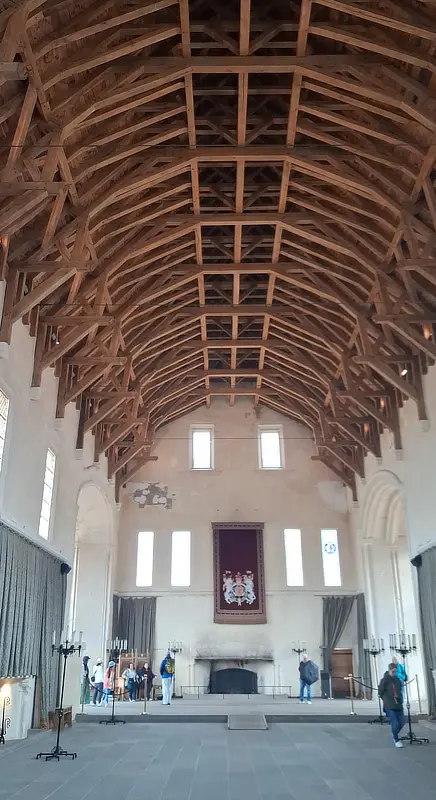
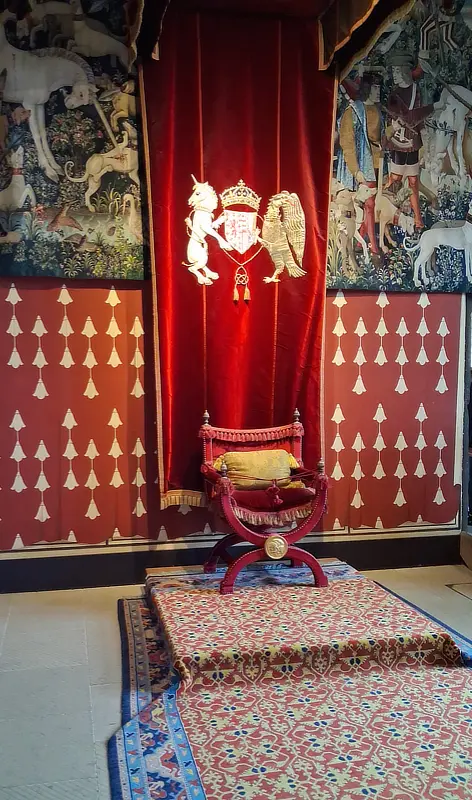
But the weather was getting me down so I returned early to the flat to dry off. So that was Stirling and Falkirk – a very interesting break. There is still so much I want to see: the museum, the Bannockburn Battle site, Torwood Castle and pool, Stirling Castle in better weather. But, as you virtually have to go past Stirling to get to the Highlands, I will get the chance later on. “Stirling, I shall return!”